

A New Era of Personalized Beauty
AI‑driven skin diagnostics are reshaping how consumers discover and treat skin concerns. Using machine‑learning algorithms, devices scan for wrinkles, acne, pigmentation and hydration levels, then instantly recommend personalized serums or treatment plans. This data feeds into AR virtual try‑on platforms that overlay makeup, foundation shades and hair colors onto a live image, letting users see exact color matches before purchase. The integration of AI and AR not only speeds decision‑making but also reduces product waste.
Sustainability is becoming a core pillar of formulation innovation. Biotech‑derived actives such as lab‑grown collagen, fermentation‑produced peptides and microbiome‑tailored serums replace animal‑derived or petro‑chemical ingredients, delivering cleaner performance and a smaller carbon footprint. Brands are also leveraging 3‑D printing and IoT‑enabled smart dispensers to produce hyper‑personalized batches on demand, further minimizing excess inventory.
Inclusive product development is driven by research into hyperpigmentation in deeper skin tones and eczema‑prone skin, ensuring that shade ranges and active concentrations address the full spectrum of U.S. consumers. AI‑powered analytics help map diverse skin profiles, enabling truly universal beauty solutions.
Driving Forces Behind Modern Beauty Trends
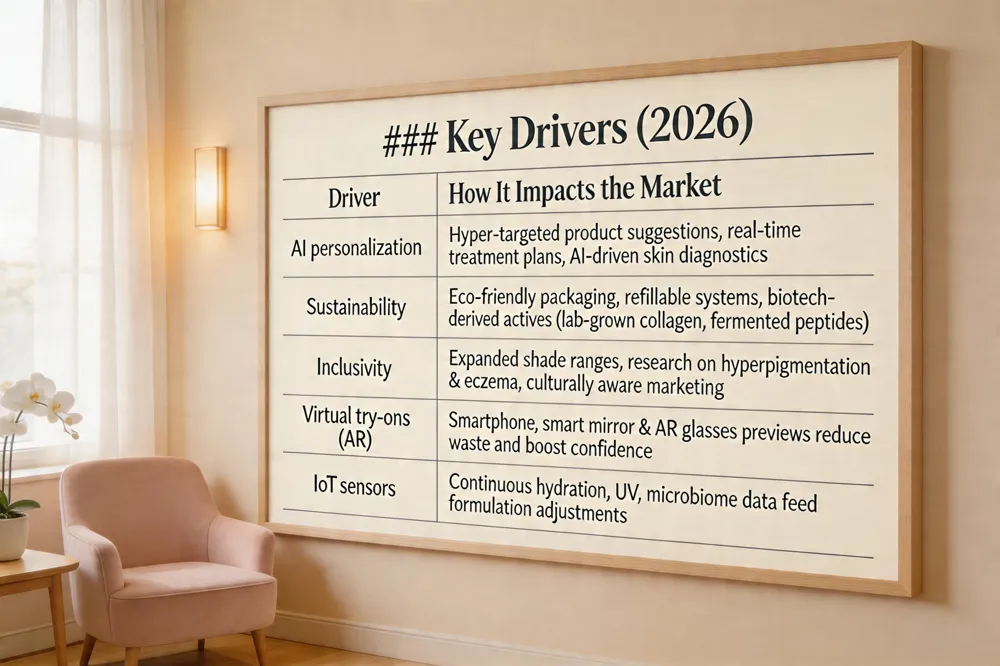 | |
| AI personalization, sustainability, inclusivity, and virtual try‑ons are reshaping the beauty landscape in 2026. AI‑driven skin diagnostics and recommendation engines—now used by brands like L’Oréal, Estee Lauder, and Sephora—deliver hyper‑personalized product suggestions and real‑time treatment plans, while smart IoT sensors feed continuous hydration, UV, and microbiome data to customize formulations. Consumers demand eco‑friendly packaging, refillable systems, and transparent ingredient sourcing; biotech‑derived actives such as lab‑grown collagen and fermentation‑produced peptides meet these clean‑beauty expectations. Inclusive research focuses on hyperpigmentation in deeper skin tones and eczema in sensitive skin, driving shade‑range expansions and culturally aware marketing. AR virtual try‑ons on smartphones, smart mirrors, and AR glasses let shoppers test makeup, hair color, and even surgical outcomes instantly, reducing waste and increasing confidence. Together, these forces create a hybrid market where medical aesthetics and everyday beauty converge, urging practices to adopt AI‑enhanced consultations, sustainable product lines, and diverse player showcases to stay competitive. |

Key Players and Market Dynamics
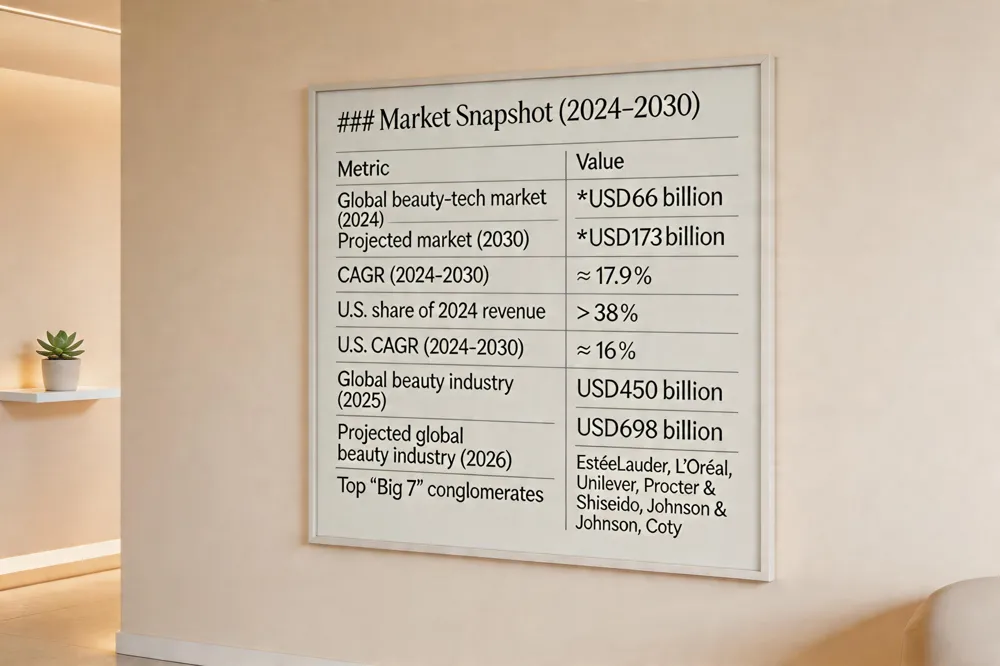 | |
| The “big 7” beauty conglomerates—Estée Lauder Companies, L’Oréal, Unilever, Procter & Gamble, Shiseido, Johnson & Johnson, and Coty—dominate the global market, controlling hundreds of brands across skincare, makeup, haircare, fragrance and personal‑care categories and generating billions in revenue. The global beauty‑tech market, valued at roughly USD 66 billion in 2024, is projected to reach about USD 173 billion by 2030 (CAGR ≈ 17.9 %). The United States accounts for over 38 % of 2024 revenue and is expected to grow at a CAGR of ≈ 16 % through 2030, driven by AI‑powered personalization, IoT‑enabled devices, and AR virtual try‑ons. The broader global beauty industry is a multibillion‑dollar sector, estimated at $450 billion in 2025 and $570 billion in 2024, with forecasts reaching $698 billion by 2026. A 2024 study on innovation efficiency shows that higher patent‑to‑R&D ratios among leading firms (L’Oréal, Estée Lauder, Shiseido, Procter & Gamble, Beiersdorf) correlate with stronger financial performance, underscoring the strategic importance of sustained technological R&D, regulatory compliance, and supply‑chain optimisation. |

Emerging Technologies Shaping Products and Procedures
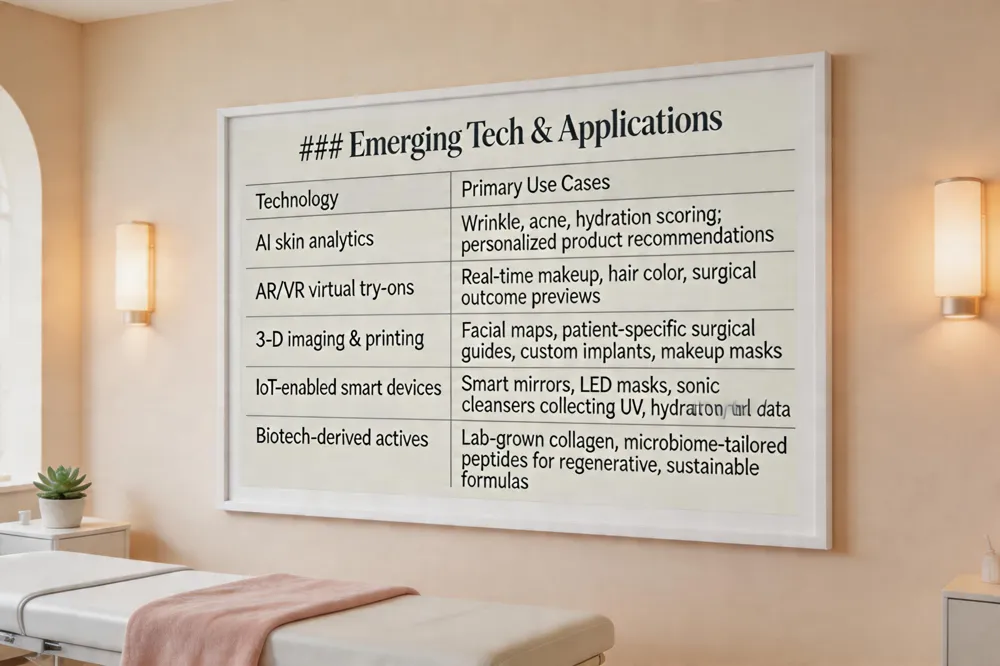 | |
| AI skin analytics, AR/VR virtual try‑ons, 3‑D imaging and printing, IoT‑enabled smart devices, and biotech‑derived actives are converging to redefine beauty products and procedures. |

AI‑driven skin analysis scans wrinkles, acne and hydration, delivering personalized recommendations and feeding data‑backed trend forecasts that guide clinics toward emerging facial‑contour styles and filler techniques.
AR and VR platforms let consumers instantly preview makeup, hair color, or surgical outcomes, boosting confidence and reducing product returns.
3‑D imaging creates precise facial maps and, combined with 3‑D printing, produces patient‑specific surgical guides, custom implants and personalized makeup masks.
IoT‑connected devices such as smart mirrors, LED masks and sonic cleansers collect metrics—UV exposure, hydration, collagen density—and adjust treatment protocols on the fly.
Biotech‑derived actives, including lab‑grown collagen and microbiome‑tailored peptides, enable regenerative, sustainable formulations with reduced environmental impact.
Together these technologies empower clinicians to offer safer, more effective, and tailored aesthetic experiences while meeting rising consumer demand for personalization, transparency and eco‑conscious beauty.
AI beauty trends drive avatars that personalize marketing, while technology and beauty foster a journey.
Innovative Companies and Cutting‑Edge Solutions
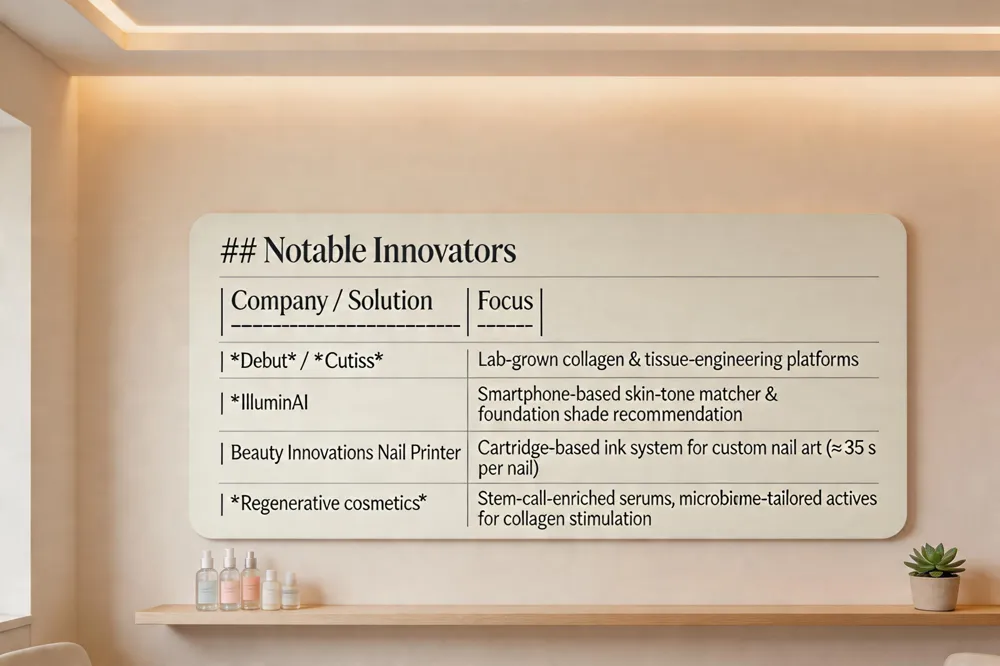 | |
| Biotech ingredient startups such as Debut and Cutiss are redefining beauty with lab‑grown collagen, fermentation‑derived peptides and microbiome‑tailored serums and skin‑tissue‑engineering platforms that deliver sustainable, high‑performance actives. AI‑driven skin‑tone matchers like IlluminAI use a smartphone camera to analyze facial symmetry, ethnicity and pigment, instantly recommending exact foundation shades and personalized skincare regimens. The Beauty Innovations Nail Printer brings hyper‑personalized nail art to salons and mobile professionals; a cartridge‑based ink system and companion app print custom designs in roughly 35 seconds per nail, expanding service menus with affordable, low‑maintenance technology. Regenerative cosmetics leverage biotech‑derived actives—lab‑grown collagen, microbiome‑tailored serums and stem‑cell‑enriched fat grafts—to stimulate collagen production, repair cellular damage and support long‑term skin health. Together, these breakthroughs illustrate how AI, biotechnology and smart devices converge to create a more personalized, sustainable, and efficient beauty ecosystem, meeting the expectations of U.S. consumers for clean, inclusive, and data‑backed aesthetic solutions. |

Integration of Tech in Clinical Practice
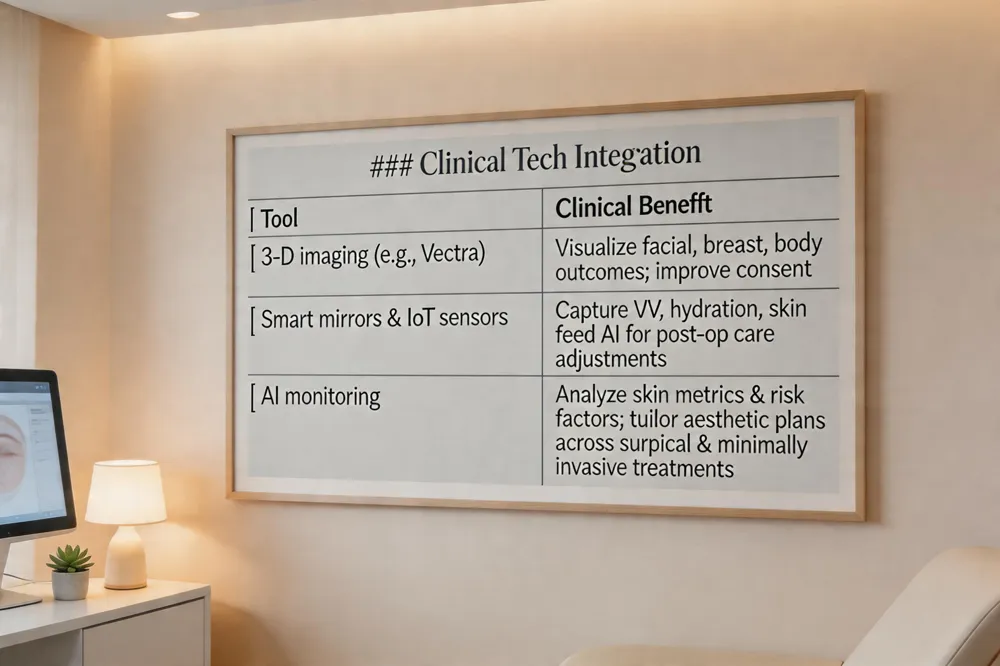 | |
| 3‑D imaging and simulation tools such as Vectra let patients preview facial, breast and body outcomes, improving consent and satisfaction. Mirrors and devices capture UV exposure, hydration and skin tone, feeding data to AI monitoring that adjusts post‑op care and alerts clinicians. AI analyzes skin metrics and risk factors, delivering aesthetic plans that blend surgical, minimally invasive and treatments. |

Beauty tech industry – The sector reshapes aesthetic procedure marketing, planning and delivery with AI skin analyses, virtual‑try‑on tools and 3‑D imaging. Device data lets surgeons tailor post‑op regimens, while biotech‑derived ingredients meet demand.
Beauty market – Valued at $1.86 trillion in 2025 and projected near $4 trillion by 2034, growth is driven significantly by social‑media influence, clean‑consumer trends, fueling demand for surgical and non‑invasive rejuvenation.
Forbes beauty industry – In 2023 U.S. cosmetics generated $94 billion; online sales now account for 41 % of purchases, and the emerging “longevity beauty” segment pushes the market toward anti‑aging and regenerative treatments.
Beauty industry challenges – Fragmented retail, value‑driven consumers, saturation in color cosmetics and economic uncertainty pressure brands to deliver results and digitally‑enabled personalization.
Historical Perspective and Fun Facts
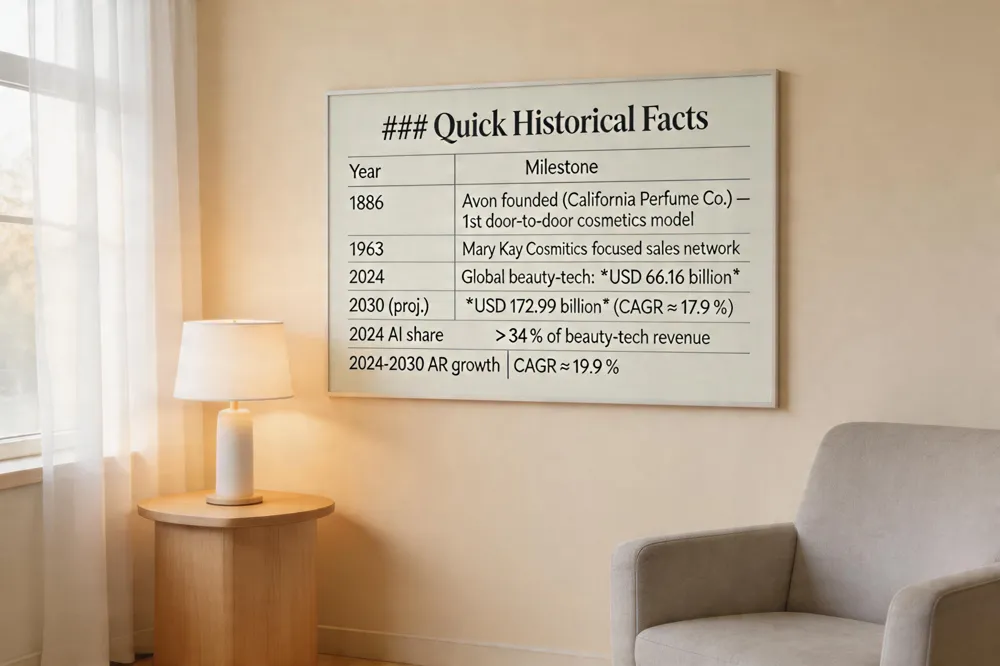 | |
| The modern beauty landscape is built on a legacy that dates back over a century. Avon, originally the California Perfume Company, was founded in 1886 by David H. McConnell and pioneered door‑to‑door sales of cosmetics and fragrances, establishing a direct‑to‑consumer model that would dominate the industry for decades. In contrast, Mary Kay Ash launched Mary Kay Cosmetics in Dallas, Texas, in 1963, creating a network of independent sales representatives that emphasized empowerment and personalized service. Thus, Avon predates Mary Kay by nearly 80 years and was the first of the two iconic brands. |

Consumer expectations have dramatically shifted from simple product access to immersive, hyper‑personalized experiences. Today’s U.S. shoppers, especially Gen Z and Millennials, demand real‑time skin diagnostics, AI‑driven product recommendations, and virtual try‑on tools that let them preview makeup or skincare outcomes instantly. AI‑powered skin analysis, AR mirrors, and IoT‑enabled beauty devices now enable personalized regimens, while sustainability and clean‑beauty credentials have become non‑negotiable.
The market has evolved in lockstep with these technological advances. The global beauty‑tech market, valued at USD 66.16 billion in 2024 is projected to reach USD 172.99 billion by 2030, growing at a 17.9 % CAGR. AI alone accounted for over 34 % of 2024 revenue, and AR is expected to grow at 19.9 % CAGR through 2030. Smart skincare devices dominate the product mix, representing more than 38 % of market revenue, driven by IoT connectivity, clean‑beauty initiatives, and the surge of e‑commerce and social‑commerce platforms. Major players such as L’Oréal, Estée Lauder, Sephora, Dyson, and Shiseido are heavily investing in AI diagnostics, AR try‑ons, and biotech‑based personalized formulations.
Beauty tech trends pdf The “Beauty Tech Trends” PDF outlines how digital platforms and emerging technologies are reshaping the cosmetics industry. It highlights the rise of AI‑driven skin assessments, virtual try‑on tools, and personalized formulation algorithms that allow consumers to preview products before purchase. The report also examines the impact of social‑media‑driven influencer culture, such as TikTok’s “#eyeslipsface,” and how influencer marketing accelerates trend cycles among Gen Z shoppers. Additionally, it discusses regulatory developments like the Modernization of Cosmetics Regulation Act (MoCRA), which aim to improve product safety and transparency amid rapid tech adoption. Finally, the document emphasizes the need for ethical guidelines and consumer education to mitigate impulsive buying and unrealistic beauty standards.
Embracing the Future of Aesthetics
Beauty technology is advancing at a rapid pace, driven by continuous innovation in AI, AR, IoT and biotechnology. Smart devices and AI‑driven diagnostics enable clinicians to create patient‑centered treatment plans that adapt in real time to skin metrics, while virtual‑try‑on and 3‑D imaging empower consumers to visualize outcomes before any procedure. At the same time, sustainable formulations, biodegradable packaging and energy‑efficient devices support environmental stewardship and meet the growing demand for clean, transparent beauty. Together, these forces propel the industry toward a resilient, personalized, and eco‑responsible future. Regulatory compliance and privacy guide growth.