

Why Recovery and Wellness Matter Together
Physical healing and mental well‑being are tightly linked; stress hormones such as cortisol can impede collagen synthesis and slow tissue repair, while adequate sleep and positive mood boost immune function and accelerate recovery. Holistic wellness—combining nutrition, hydration, sleep, modest activity, and stress‑reduction practices—creates an environment where cells receive the nutrients and oxygen they need and the mind remains resilient, leading to fewer complications and a smoother convalescence. For post‑surgical patients, the most relevant dimensions of the are physical (protein‑rich diet, gentle ambulation, hydration), emotional (mindfulness, gratitude, realistic goal‑setting), social (supportive family or peer connections), and spiritual or intellectual (meaningful activities that reduce anxiety). Together, these pillars shorten healing time and improve long‑term outcomes.
Post‑operative Essentials: The Plastic Surgery Recovery List
Post‑operative Essentials
| Pillar | Key Recommendations |
| Compression & wound care | Wear prescribed garments continuously for the first weeks; keep incisions clean & dry; change dressings/drains per schedule; avoid submerging until cleared |
| Rest & activity restrictions | Supine 24‑48 h, then gentle walks every hour; avoid bending, lifting >10 lb, vigorous exercise for 1‑2 weeks |
| Protein‑rich, low‑sodium diet & hydration | 1.2–1.5 g protein/kg body weight daily (lean meats, fish, eggs, plant sources); limit sodium; drink 8‑10 glasses water/day |
| Alcohol, smoking, medication adherence | No alcohol or nicotine ≥4 weeks before/after surgery; take analgesics, antibiotics, anti‑inflammatories as directed with food |
| Follow‑up schedule & emergency signs | Attend all postoperative visits; call office if fever >101 °F, escalating pain, drainage, bruising, or sudden leg swelling |
| (https://rank-ai-generated-images.s3-us-east-2.amazonaws.com/4561c752-74b2-4d66-95f5-e7121f01f6f2-banner-c1eae1e3-4838-42cf-8e85-69b1c65def30.webp) | |
| A successful plastic‑surgery recovery starts with strict adherence to your surgeon’s postoperative plan. |
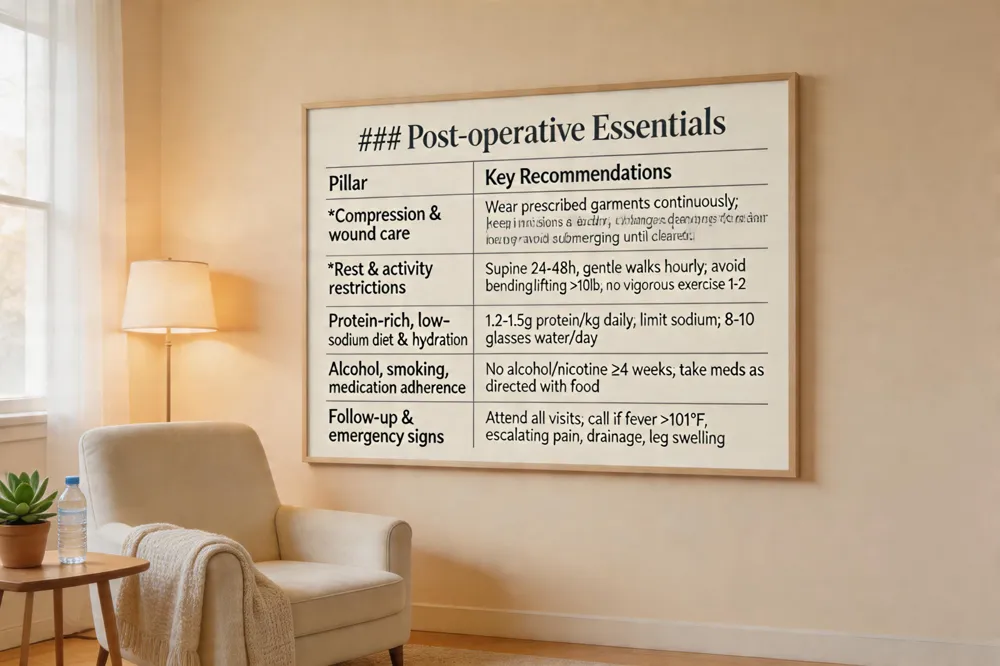
Compression garments and wound care – Wear the prescribed compression garments continuously for the first weeks as instructed to reduce edema and support tissue remodeling. Keep incisions clean and dry; change dressings or drains according to the surgeon’s schedule, and avoid submerging the site until cleared.
Rest, light ambulation, and activity restrictions – Rest supine the first 24‑48 hours, then begin gentle walks every hour to promote circulation and prevent deep‑vein thrombosis. Refrain from bending, lifting more than 10 pounds, and vigorous exercise for at least one to two weeks.
Protein‑rich, low‑sodium diet and hydration – Aim for 1.2–1.5 g protein per kilogram body weight daily from lean meats, fish, eggs, or plant sources. Limit sodium to curb swelling, and drink 8‑10 glasses of water each day to sustain skin turgor and nutrient transport.
Alcohol, smoking, and medication adherence – Avoid alcohol and nicotine for at least four weeks before and after surgery, as they impair collagen synthesis and increase infection risk. Take all prescribed analgesics, antibiotics, and anti‑inflammatory meds exactly as directed, with food to minimize gastrointestinal upset.
Follow‑up schedule and emergency signs – Attend every scheduled postoperative visit; these allow the surgeon to monitor healing, remove sutures, and adjust care. Call the office immediately if you notice fever >101 °F, escalating pain, drainage, bruising, or sudden movement of leg swelling, could indicate a clot.
By integrating these five pillars—compression, rest, nutrition, abstinence from harmful substances, and vigilant follow‑up—you create a supportive environment for optimal healing and lasting aesthetic results.
Personalized Recovery Messaging and Ongoing Support
Personalized Recovery Messaging
| Message Type | Core Content |
| Recovery from surgery message | Warm greeting, reassurance of step‑by‑step healing, instruction to follow post‑op care, keep incisions clean, limit activity, attend follow‑ups, contact office for redness/swelling/fever/pain |
| Post‑surgery meaning | Definition of recovery period, focus on pain control, wound care, gentle movement; timeline from days (pain control) to weeks/months (tissue remodeling, psychological comfort) |
| Support strategy | Written instructions, regular follow‑up calls, patient‑centered communication, prompt response to concerns, encouragement of daily support |
| (https://rank-ai-generated-images.s3-us-east-2.amazonaws.com/4561c752-74b2-4d66-95f5-e7121f01f6f2-banner-9aef7161-1cef-46be-ab4f-20b547e633f9.webp) | |
| Effective, patient‑focused communication sets the tone for a smooth postoperative course. Clear, written post‑op instructions—detailing incision care, activity limits, medication schedules, nutrition, hydration, and sleep recommendations—help patients follow evidence‑based guidelines and reduce complications. We advise patients to call the office immediately if they notice unusual redness, swelling, fever, worsening pain, or any sign of infection; early intervention prevents escalation. Regular follow‑up visits reinforce confidence, allow the care team to monitor healing, and provide an opportunity to address concerns. |
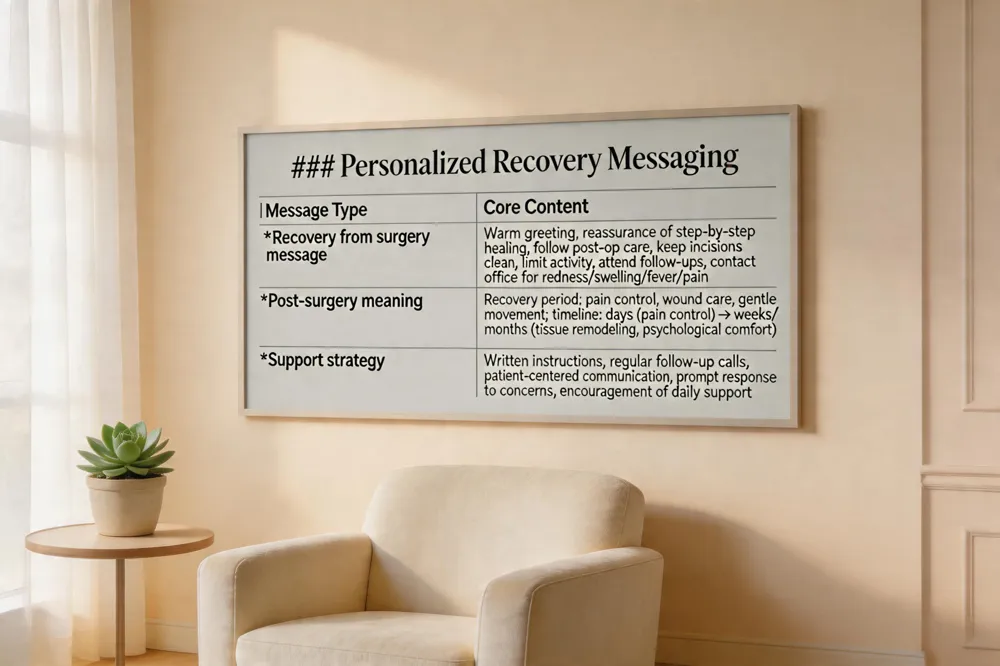
Recovery from surgery message: Dear [Patient Name], thank you for trusting Julie Kupersmith, MD, PC with your aesthetic journey. Your healing will progress step by step, and we ask that you follow the detailed post‑op instructions we provided, keep your incision sites clean, and limit strenuous activity for the recommended period. Please attend all scheduled follow‑up appointments so we can monitor your progress and address any concerns promptly. If you notice increased redness, swelling, fever, or pain that feels out of the ordinary, contact our office immediately. We are here to support you every day and look forward to seeing your beautiful results as you recover.
Post surgery recovery meaning: Post‑surgery recovery is the period after a procedure during which the body heals the incision, reduces inflammation, and restores normal function. It involves not only physical healing but also the gradual return of psychological comfort, social activity, and economic normalcy as patients regain confidence in their appearance and daily life. In the first few days the focus is on pain control, wound care, and gentle movement to promote circulation and prevent complications. Over the next weeks to months, patients follow a personalized plan of rest, nutrition, light exercise, and follow‑up visits to support tissue remodeling and optimal results. Successful recovery is measured by the patient’s ability to resume pre‑operative activities—or better—while feeling safe and satisfied with the aesthetic outcome.
Phases of Healing: Stages of Recovery After Surgery
Phases of Healing
| Phase | Timeframe | Primary Goals | Typical Care Strategies |
| Hemostasis | 0‑48 h | Stop bleeding, clot formation | Clean dressings, ice packs, pain meds, light protein snack, adequate hydration |
| Inflammation | Days 3‑7 | Reduce swelling, clear debris | Gentle walking, ankle pumps, compression garments, vitamin C & zinc‑rich diet |
| Proliferation | Weeks 1‑3 | New tissue formation | Light surgeon‑approved activity, avoid heavy lifting, 1.5‑2 g protein/kg, 2‑3 L water daily |
| Remodeling | Weeks 4‑6 | Scar maturation, strength | Gradual resistance exercises, scar massage, SPF 30+ sun protection, 7‑9 h sleep, stress reduction |
| Long‑term maintenance | >6 weeks | Preserve results, overall wellness | Balanced nutrition, regular low‑impact activity, adequate sleep, no smoking/alcohol |
| (https://rank-ai-generated-images.s3-us-east-2.amazonaws.com/4561c752-74b2-4d66-95f5-e7121f01f6f2-banner-20aacdd2-8b23-4080-960d-322745c7da44.webp) | |||
| Recovery after cosmetic surgery follows a predictable timeline that can be divided into four primary phases, each with specific goals and care strategies. |
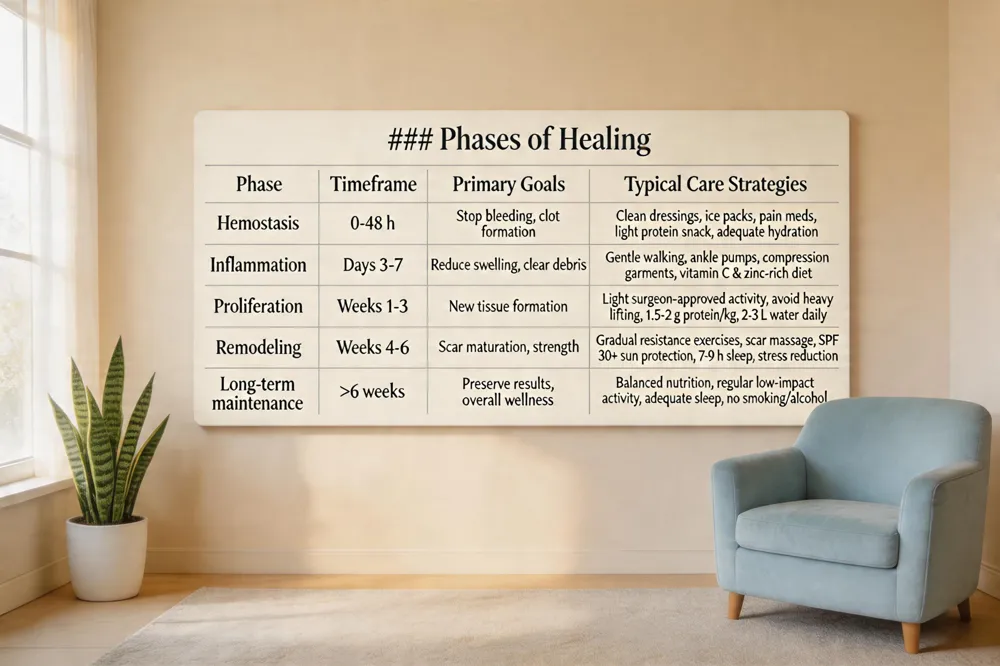
Hemostasis (0‑48 hours) – The body works to stop bleeding and form a protective clot. Keep dressings clean, use prescribed ice packs, and take pain medication as directed. Adequate hydration and a light, protein‑rich snack help maintain blood volume and support clot stability.
Inflammation (days 3‑7) – Swelling, redness, and mild discomfort signal the immune response clearing debris. Gentle walking, ankle pumps, and compression garments promote circulation and reduce edema. Continue a balanced diet rich in vitamin C and zinc and lean protein to aid collagen synthesis and immune function.
Proliferation (weeks 1‑3) – New skin cells, collagen, and blood vessels form. Start light, surgeon‑approved activity such as short walks and gentle stretching; avoid heavy lifting (>10 lb). Maintain 1.5–2 g protein/kg body weight daily and stay well‑hydrated (≈2–3 L water) to fuel tissue repair.
Remodeling (weeks 4‑6) – The scar matures and gains strength. Introduce gradual resistance exercises, continue scar massage, and protect incisions from sun exposure with SPF 30+. Healthy sleep (7–9 h) and stress‑reduction techniques (meditation, deep breathing) support hormone balance and optimal remodeling.
Long‑term maintenance – Beyond six weeks, uphold a lifestyle of balanced nutrition, regular low‑impact activity, adequate sleep, and avoidance of smoking or excess alcohol (avoid smoking) to preserve results and overall wellness.
Timeline Expectations: Recovery Time, Pain Peaks, and the Role of Rest
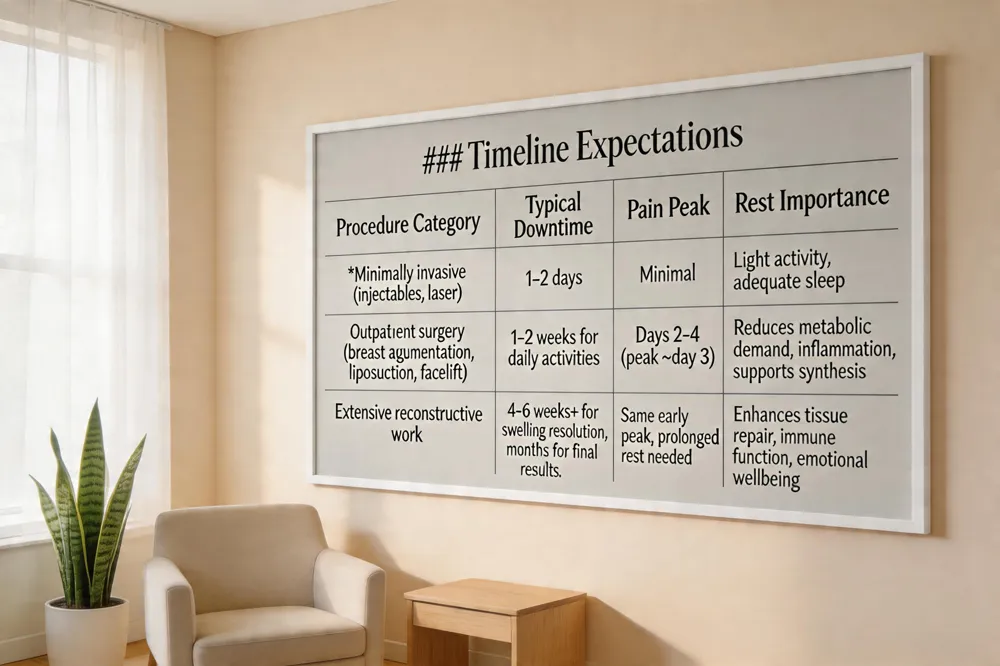
Timeline Expectations
| Procedure Category | Typical Downtime | Pain Peak | Rest Importance |
| Minimally invasive (injectables, laser) | 1‑2 days | Minimal | Light activity, adequate sleep |
| Outpatient surgery (breast augmentation, liposuction, facelift) | 1‑2 weeks for daily activities | Days 2‑4 (peak ~day 3) | Reduces metabolic demand, inflammation, supports collagen synthesis |
| Extensive reconstructive work | 4‑6 weeks+ for swelling resolution, months for final results | Same early peak; prolonged rest needed | Enhances tissue repair, immune function, emotional wellbeing |
| ](https://rank-ai-generated-images.s3-us-east-2.amazonaws.com/4561c752-74b2-4d66-95f5-e7121f01f6f2-banner-102bffc6-31b2-42c5-8b97-9e15fde19b57.webp) | |||
| Recovery time after plastic surgery depends on the invasiveness of the procedure. Minimally invasive treatments (injectables, laser resurfacing) usually need 1‑2 days of downtime, while outpatient surgeries such as breast augmentation, liposuction, or a facelift require 1‑2 weeks before most daily activities resume. More extensive facial or body‑reconstructive work may need 4‑6 weeks or longer for swelling to subside and final results to appear; full aesthetic maturation can continue for months. Pain is typically most intense on postoperative day 2‑4, peaking around day 3 when the anesthetic wears off and the inflammatory response is highest. Effective pain control during this window prevents escalation and facilitates early mobility. Rest is critical because it lowers metabolic demand, reduces inflammation, and allows tissue repair processes—including collagen synthesis—to operate efficiently. Adequate sleep releases endorphins, supports immune function, and improves emotional wellbeing, all of which accelerate healing while minimizing complications such as infection or blood clots. |
Nutrition, Supplements, and Lifestyle Choices for Faster Healing
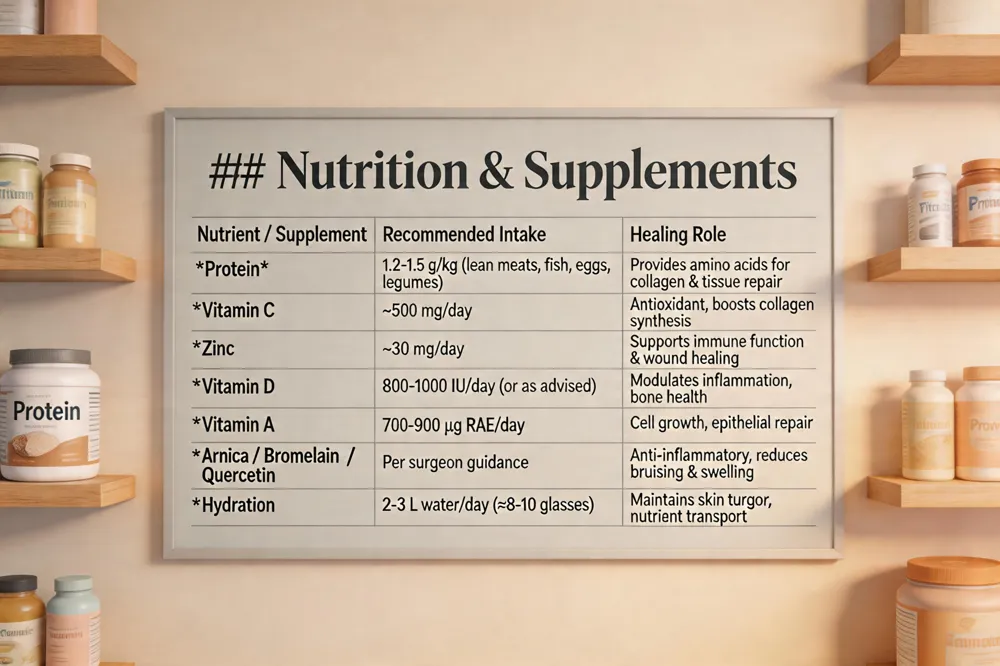
Nutrition & Supplements
| Nutrient / Supplement | Recommended Intake | Healing Role |
| Protein | 1.2‑1.5 g/kg (lean meats, fish, eggs, legumes) | Provides amino acids for collagen & tissue repair |
| Vitamin C | ~500 mg/day | Antioxidant, boosts collagen synthesis |
| Zinc | ~30 mg/day | Supports immune function & wound healing |
| Vitamin D | 800‑1000 IU/day (or as advised) | Modulates inflammation, bone health |
| Vitamin A | 700‑900 µg RAE/day | Cell growth, epithelial repair |
| Arnica / Bromelain / Quercetin | Per surgeon guidance | Anti‑inflammatory, reduces bruising & swelling |
| Hydration | 2‑3 L water/day (≈8‑10 glasses) | Maintains skin turgor, nutrient transport |
| (https://rank-ai-generated-images.s3-us-east-2.amazonaws.com/4561c752-74b2-4d66-95f5-e7121f01f6f2-banner-6cfaf689-fef6-4233-a5d2-3d59ee94803e.webp) | ||
| Recovery after breast augmentation is optimized by nutrition and lifestyle choices. |
Foods to avoid after breast augmentation: avoid alcohol and caffeine, processed foods, sugary snacks, and doses of vitamin C or E that can thin blood. Limit fruits such as berries, cherries, grapes, tomatoes, and vinegar‑based dressings for weeks to reduce bleeding risk.
How to heal surgery wounds faster naturally: keep incisions clean and moist, follow activity limits, and quit smoking or alcohol. Prioritize a protein diet with meats, eggs, legumes, and vitamin C, zinc, magnesium, and vitamin A from citrus, leafy greens, nuts, and grains. Hydrate, get 7‑9 hours sleep, reduce stress, and move to improve circulation.
Supplements to heal faster after surgery: protein or amino‑acid blends, vitamin C (~500 mg), zinc (~30 mg), vitamin D, vitamin A, and agents such as arnica, bromelain, or quercetin. Discuss any supplement plan with your surgeon.
What not to do after major surgery: avoid smoking, alcohol, heavy lifting, strenuous activity, baths, swimming, and driving until cleared. Do not ignore signs of infection—fever, redness, drainage, or worsening pain—and contact your surgeon promptly.
Special Situations, Nursing Care, and Wellness Practices
Special Situations & Nursing Care
| Situation | Nursing Role / Patient Tips |
| Bowel care after Lipo 360 | Initiate stool softener, encourage clear fluids, short frequent walks, monitor for constipation, advise glycerin suppository/enema if no BM in 2‑3 days |
| Facial recovery | Elevate head 30‑40°, apply brief cold compresses, soft‑food diet, avoid pressure on incisions, SPF 30+ after closure, gentle cleansing |
| General nursing duties | Monitor vitals, pain, wound/drain status; assist ambulation & hydration; educate on home‑care; coordinate follow‑ups; detect infection early |
| Overall healing acceleration | Follow surgeon’s plan, wear compression, move gently, protein‑rich diet, stay hydrated, avoid smoking/alcohol, use cold therapy, attend all appointments |
| (https://rank-ai-generated-images.s3-us-east-2.amazonaws.com/4561c752-74b2-4d66-95f5-e7121f01f6f2-banner-d287ed80-c247-476d-bc56-19d630b46276.webp) | |
| Bowel care after Lipo 360: Narcotic pain meds can slow gut motility; start a stool softener (e.g., Colace) as soon as you’re mobile, drink clear fluids, and take short, frequent short walks. If no bowel movement after 2‑3 days, use a glycerin suppository or OTC enema. Avoid straining and heavy lifting for 2‑3 weeks; keep the compression garment on. Contact the surgeon for persistent nausea, severe abdominal pain, or no BM beyond 4‑5 days. |
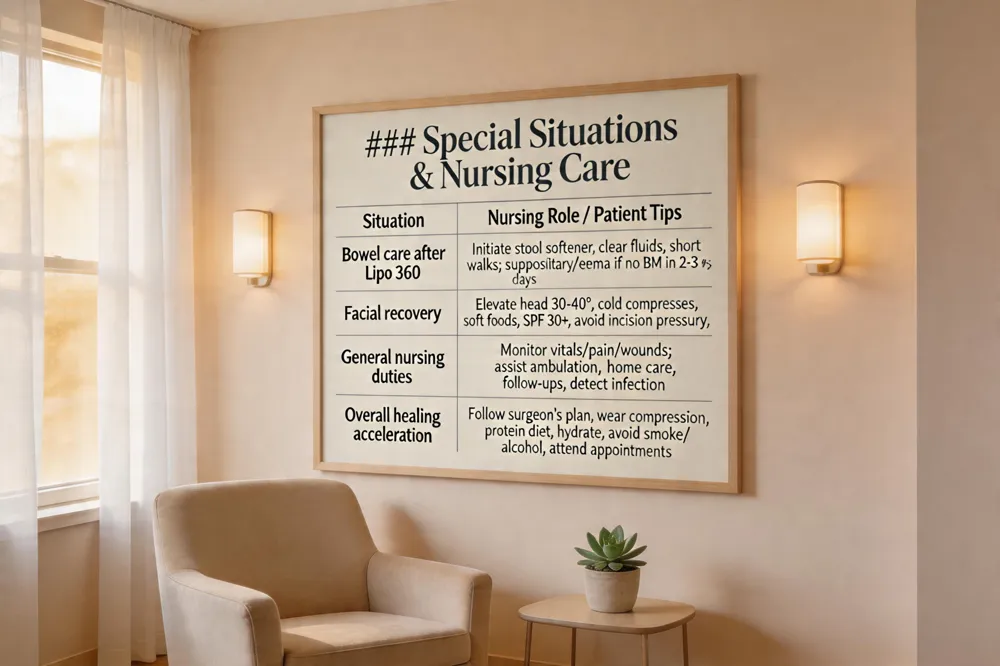
Facial recovery tips: Swelling peaks 48‑72 h and then tap over 1‑2 weeks. Elevate the head 30‑40°, apply cold compresses briefly, and avoid pressure on incisions. Stick to a soft‑food diet, stay well‑hydrated, and limit strenuous activity and sun exposure for at least two weeks. Use prescribed pain relievers, avoid NSAIDs unless cleared, cleanse gently with a mild cleanser, moisturize, and apply SPF 30+ once incisions are closed.
Role of nursing staff: Nurses continuously monitor vital signs, pain levels, wound care, dressing changes, drain management, and infection signs. They assist with ambulation, hydration, hygiene, and educate patients on home‑care techniques while coordinating scheduled follow‑up appointments and logistical support.
Speeding overall healing: Follow the surgeon’s after‑care plan exactly, keep incisions clean, wear compression as directed, move gently (short walks), eat a protein‑rich balanced diet with plenty of vitamin C, stay hydrated, avoid smoking/alcohol, use cold therapy for swelling, and attend all scheduled follow‑ups.
Embracing a Comprehensive Wellness Plan for Long‑Term Success
Integrating physical, emotional, and social wellness creates a foundation for recovery after surgery. Regular exercise, balanced nutrition, hydration, and 7‑9 hours of sleep support tissue repair, while mindfulness, gratitude, and realistic goal‑setting reduce stress and improve mood. Social connections provide emotional support and accountability, helping prevent relapse and promote a positive mindset. If distressing symptoms such as persistent insomnia, loss of interest, irritability, or appetite changes last more than two weeks, professional mental‑health assistance is warranted; primary‑care providers can refer patients to psychologists, psychiatrists, or social workers. The 988 Suicide & Crisis Lifeline (988lifeline.org) offers confidential 24/7 help for anyone experiencing suicidal thoughts or emotional crisis. Ongoing follow‑up appointments and adherence to a lifestyle plan—including hydration, nutrition, and social engagement—ensure sustained wellness and long‑term outcomes.