

Introduction to Holistic Wellness
Mindfulness is the intentional, non‑judgmental awareness of present‑moment thoughts, feelings, and bodily sensations, cultivated through practices such as focused breathing, body‑scan meditation, and gratitude exercises (American Psychological Association, 2020; Johns Hopkins Medicine). Self‑care spans seven recognized dimensions—physical (sleep, nutrition, gentle movement), emotional (gratitude journaling, self‑compassion), mental (mind‑reappraisal, stress‑reduction), social (supportive relationships), spiritual (meditation, purpose‑finding), professional/educational (boundaries, goal‑setting), and financial (budgeting)—each contributing to overall well‑being (Verywell Mind, 2024). For aesthetic patients, these practices lower cortisol, improve immune function, and enhance pain tolerance, directly supporting wound healing, reducing postoperative anxiety, and increasing satisfaction with cosmetic outcomes (American Society of Plastic Surgeons; Michigan Cosmetic Surgery).
Mindfulness Foundations and Key Concepts
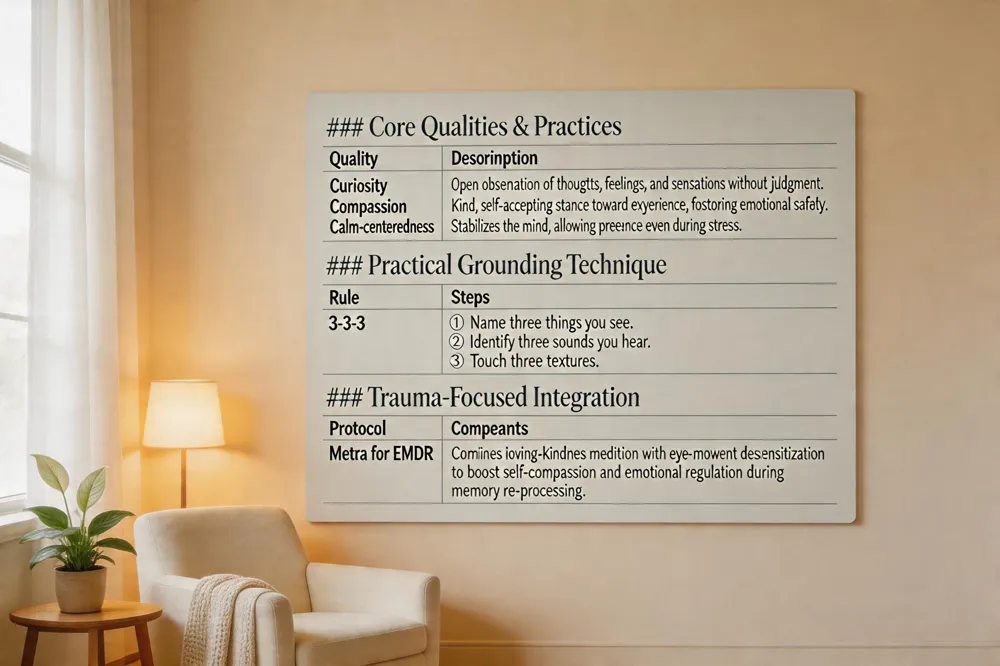
Core Qualities & Practices
| Quality | Description |
| Curiosity | Open observation of thoughts, feelings, and sensations without judgment. |
| Compassion | Kind, self‑accepting stance toward experience, fostering emotional safety. |
| Calm‑centeredness | Stabilizes the mind, allowing presence even during stress. |
Practical Grounding Technique
| Rule | Steps |
| 3‑3‑3 | 1️⃣ Name three things you see.<br>2️⃣ Identify three sounds you hear.<br>3️⃣ Touch three textures. |
Trauma‑Focused Integration
| Protocol | Components |
| Metta for EMDR | Combines loving‑kindness meditation with eye‑movement desensitization to boost self‑compassion and emotional regulation during memory re‑processing. |
| ](https://rank-ai-generated-images.s3-us-east-2.amazonaws.com/4561c752-74b2-4d66-95f5-e7121f01f6f2-banner-45eefcdf-881d-4823-867c-65131630d7fc.webp) | |
| Mindfulness is the intentional, non‑judgmental awareness of the present moment, observing thoughts, feelings, and bodily sensations as they arise. It is built on three core qualities—curiosity, compassion, and calm‑centeredness. Curiosity invites open observation of experience, compassion brings a kind, self‑accepting stance, and calm‑centeredness stabilizes the mind so it can remain present even amid stress. A practical grounding technique is the 3‑3‑3 rule: name three things you see, three sounds you hear, and three textures you can touch, which quickly redirects anxious rumination to the here‑and‑now. In trauma‑focused care, the Metta protocol for EMDR blends mindfulness‑based loving‑kindness (Metta) practices with Eye Movement Desensitization and Reprocessing, enhancing emotional regulation and self‑compassion during the re‑processing of distressing memories. Together, these concepts empower patients—especially those undergoing aesthetic procedures—to manage anxiety, improve pain tolerance, and foster a positive body image throughout recovery. |
Self‑Care Essentials for Stress Management
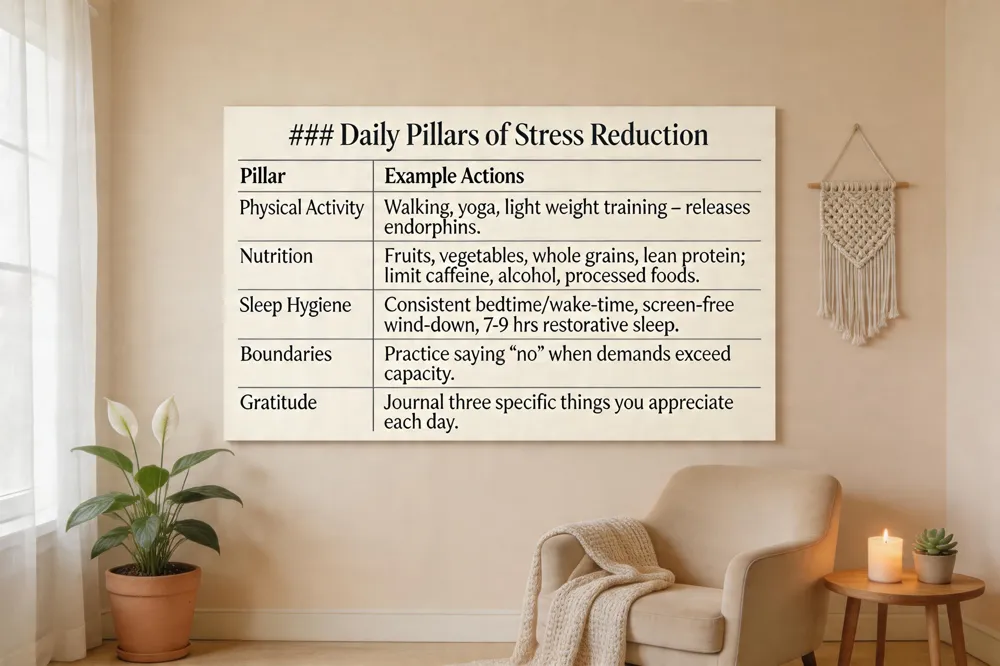
Daily Pillars of Stress Reduction
| Pillar | Example Actions |
| Physical Activity | Walking, yoga, light weight training – releases endorphins. |
| Nutrition | Fruits, vegetables, whole grains, lean protein; limit caffeine, alcohol, processed foods. |
| Sleep Hygiene | Consistent bedtime/wake‑time, screen‑free wind‑down, 7‑9 hrs restorative sleep. |
| Boundaries | Practice saying “no” when demands exceed capacity. |
| Gratitude | Journal three specific things you appreciate each day. |
| ](https://rank-ai-generated-images.s3-us-east-2.amazonaws.com/4561c752-74b2-4d66-95f5-e7121f01f6f2-banner-76d9031e-7bad-4d2e-a749-6b5833a79719.webp) | |
| Managing stress begins with a foundation of regular physical activity—walking, yoga, or light weight training releases endorphins and shifts focus from stressors. Pair movement with a balanced diet rich in fruits, vegetables, whole grains, and lean protein while limiting excess caffeine, alcohol, and processed foods to stabilize mood and energy. Prioritize sleep hygiene: maintain consistent bedtime and wake‑time, create a screen‑free wind‑down routine, and aim for 7‑9 hours of restorative rest. Set clear personal boundaries; learn to say “no” when demands exceed capacity, protecting mental bandwidth and preventing burnout. Incorporate daily gratitude practice—journal three specific things you appreciate each day to strengthen positive emotions and foster a sense of belonging. Together, these self‑care strategies reduce cortisol, improve emotional regulation, and support both physical healing and mental well‑being, especially during the recovery phase after aesthetic procedures. |
Mindfulness Benefits Across Life Domains
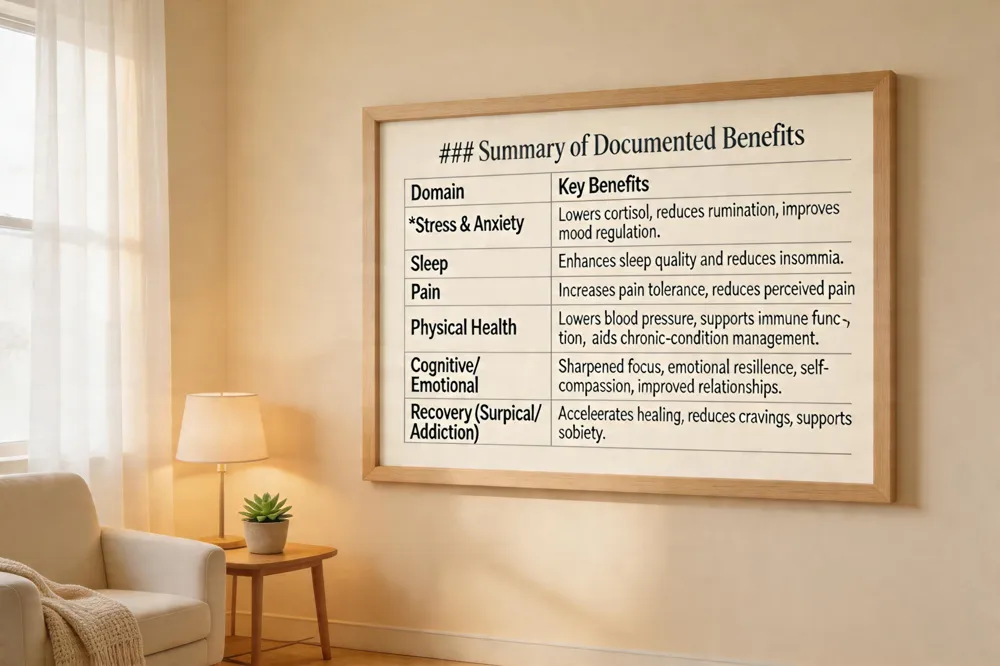
Summary of Documented Benefits
| Domain | Key Benefits |
| Stress & Anxiety | Lowers cortisol, reduces rumination, improves mood regulation. |
| Sleep | Enhances sleep quality and reduces insomnia. |
| Pain | Increases pain tolerance, reduces perceived pain intensity. |
| Physical Health | Lowers blood pressure, supports immune function, aids chronic‑condition management. |
| Cognitive/Emotional | Sharpened focus, emotional resilience, self‑compassion, improved relationships. |
| Recovery (Surgical/Addiction) | Accelerates healing, reduces cravings, supports sobriety. |
| ](https://rank-ai-generated-images.s3-us-east-2.amazonaws.com/4561c752-74b2-4d66-95f5-e7121f01f6f2-banner-25a493d8-03ec-43eb-acdf-eb2ec183108c.webp) | |
| What are the 5 benefits of being mindful? Regular mindfulness reduces stress and anxiety by lowering cortisol, improves mood regulation and depressive symptoms, enhances sleep quality, boosts pain tolerance, and supports physical health such as lower blood pressure and better chronic‑condition management (APA 2020; Harvard Health 2022; NIH 2023). |
Meditation and mindfulness benefits Both train present‑moment awareness, decreasing stress hormones and rumination, which improves mood, reduces chronic pain, and promotes restorative sleep. This cultivated acceptance builds emotional resilience and complements surgical recovery (Hoffman et al., 2010; Johns Hopkins 2023).
5 benefits of mindfulness Stress‑anxiety reduction, emotional regulation, sharpened focus and mental clarity, improved sleep, and heightened overall well‑being (MBSR 2008; Siegel 2007a).
10 benefits of mindfulness Beyond the above, mindfulness lowers blood pressure, enhances immune function, fosters compassion and stronger relationships, supports healthier habits (e.g., mindful eating), and lessens depression and PTSD symptoms (Harvard 2022; CDC 2023).
Benefits of mindfulness PDF A concise guide notes stress reduction, pressure‑relief, pain management relief, improved focus and memory, and simple body techniques such as breathing, mindfulness, and meditation walking, integrating effortlessly into daily routine.
Mindfulness in Recovery and Addiction
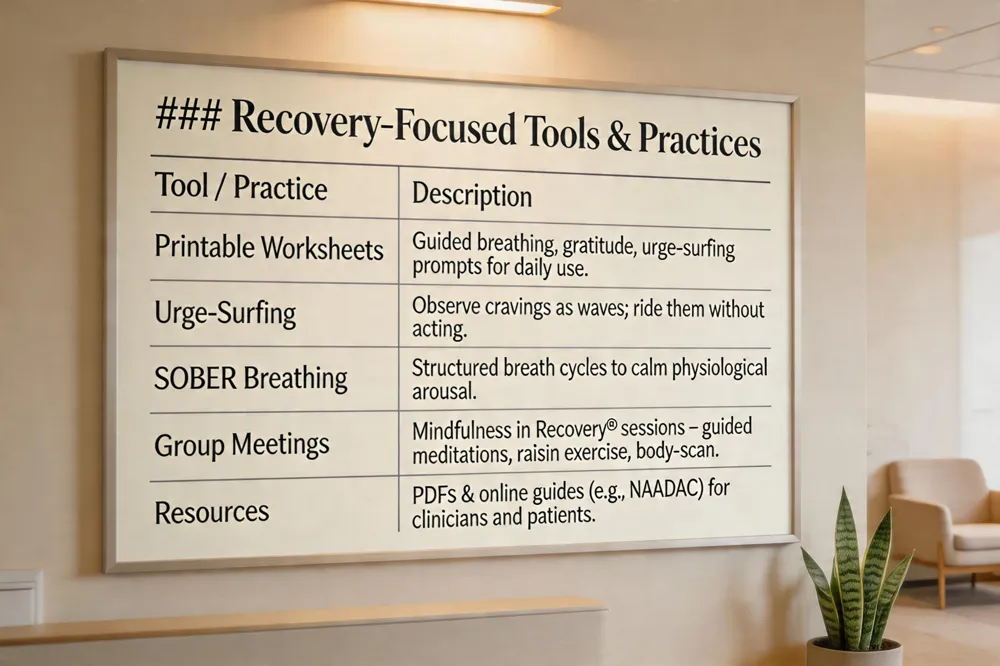
Recovery‑Focused Tools & Practices
| Tool / Practice | Description |
| Printable Worksheets | Guided breathing, gratitude, urge‑surfing prompts for daily use. |
| Urge‑Surfing | Observe cravings as waves; ride them without acting. |
| SOBER Breathing | Structured breath cycles to calm physiological arousal. |
| Group Meetings | Mindfulness in Recovery® sessions – guided meditations, raisin exercise, body‑scan. |
| Resources | PDFs & online guides (e.g., NAADAC) for clinicians and patients. |
| ](https://rank-ai-generated-images.s3-us-east-2.amazonaws.com/4561c752-74b2-4d66-95f5-e7121f01f6f2-banner-b626e6aa-3aa6-404a-b5a1-f53baa5a9d54.webp) | |
| Recovery support tools such as printable mindfulness worksheets and guided breathing exercises give patients concrete ways to practice present‑moment awareness, reduce stress, and manage cravings. Urge‑surfing and SOBER breathing techniques teach individuals to ride urges like waves, decreasing the likelihood of relapse. Trauma‑informed practices integrate non‑judgmental acceptance and self‑compassion, helping patients process triggers without re‑traumatization. Regular Mindfulness in Recovery® meetings and group activities—guided meditations, the raisin exercise, body‑scan, and visualizations—build supportive networks and reinforce skill use. |
Mindfulness in recovery PDF – A free NAADAC guide outlines present‑moment awareness, urge‑surfing, and CE‑eligible exercises for clinicians.
Mindfulness in recovery worksheets – Printable prompts for breathing, gratitude, and urge‑surfing that can be added to post‑operative care plans.
Mindfulness in recovery meetings – Weekly online/in‑person sessions (e.g., Sunday East Coast Morning at 8 a.m. ET) offering guided meditations and discussion.
Mindfulness recovery group activities – Breathing, raisin exercise, body‑scan, and shared reflections to foster compassion and accountability.
Mindfulness in addiction recovery – Breath awareness and body scans interrupt stress‑driven cravings, promote self‑compassion, and strengthen supportive relationships for sustained sobriety.
Self‑Care Resources and PDFs
Available PDFs & Their Focus
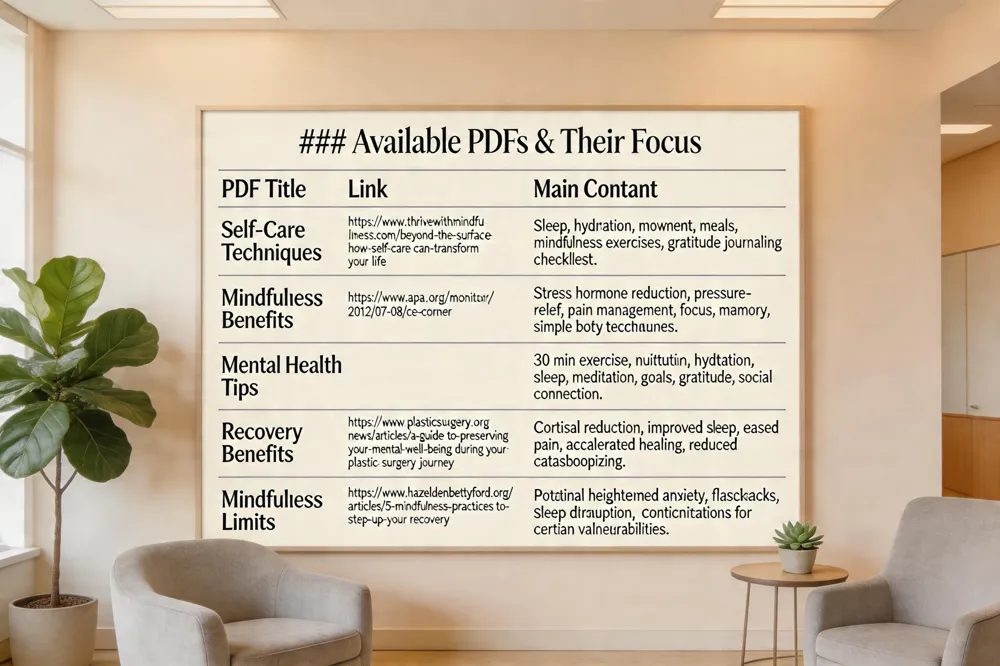
Mindfulness benefits: Benefits of mindfulness PDF – mindfulness lowers stress hormones, pressure, and anxiety while boosting tolerance, focus, and intelligence. Practices as breathing, body scans, and eating are tools.
Mental health tips: Self‑care tips for mental health PDF – habits include 30 minutes of exercise, nutrition, hydration, sleep, meditation or breathing, goals, gratitude, and social connection. Steps are for use.
Mindfulness and Self‑Care for Plastic Surgery Patients
Integrated Post‑Operative Care
| Component | Effect |
| Focused Breathing & Body‑Scan | Activates parasympathetic system → lowers cortisol & inflammation, speeds tissue repair. |
| MBSR (Mindfulness‑Based Stress Reduction) | Up to 30 % stress reduction, 15 % increase in pain tolerance after surgery. |
| Gratitude & Self‑Compassion | Improves body image, reduces rumination, enhances satisfaction with aesthetic outcomes. |
| Physical Wellness Plan | Personalized nutrition, hydration, sleep hygiene, gentle movement → supports collagen synthesis & immune function. |
| Community Support | Downloadable guidelines & peer groups lower loneliness, boost resilience (U.S. Surgeon General’s Advisory, 2022). |
| (https://rank-ai-generated-images.s3-us-east-2.amazonaws.com/4561c752-74b2-4d66-95f5-e7121f01f6f2-banner-b5517cdf-382e-48c7-8447-8487891b2cc6.webp) | |
| Post‑operative healing is accelerated when patients practice mindfulness and self‑care. Focused breathing and body‑scan meditation activate the parasympathetic nervous system, lowering cortisol and reducing inflammation, which speeds tissue repair and eases pain (American Psychological Association, 2020; CDC, 2023). Regular mindfulness lowers emotional reactivity, helping patients tolerate discomfort and adhere to after‑care instructions, while gentle movement and adequate sleep support circulation, collagen synthesis, and immune function (American Society of Plastic Surgeons; NIH). |
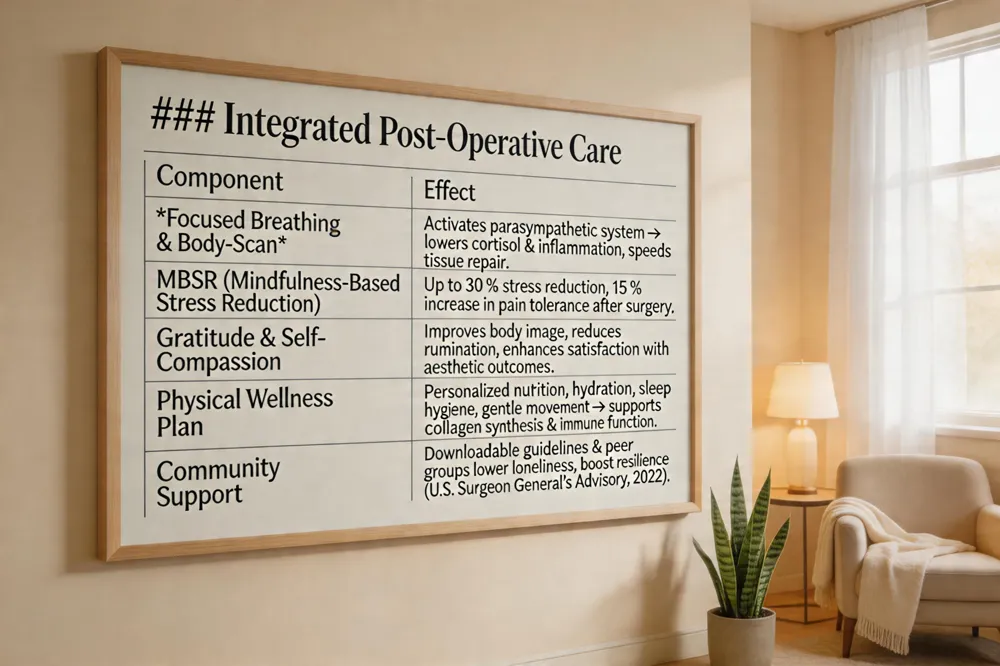
Pain and inflammation control benefit from mindfulness‑based stress reduction (MBSR); studies show up to a 30% reduction in perceived stress and a 15% increase in pain tolerance after surgery (Farb et al., 2010; Shapiro et al., 1998). Practicing gratitude and self‑compassion improves body awareness, reduces rumination, and promotes a calmer nervous system, further diminishing postoperative swelling and bruising.
Body image and satisfaction are enhanced by mindfulness‑induced self‑compassion and emotional regulation. Patients who engage in daily gratitude or mindfulness report higher satisfaction with aesthetic outcomes and a stronger sense of self‑esteem (Barnes et al., 2007; JHA Practice et al., 2022). Mindful acceptance of the healing process reduces “down moments” and supports a realistic perspective on results.
Personalized wellness plans integrate nutrition, hydration, sleep hygiene, and stress‑management techniques tailored to each patient. The U.S. Department of Health and Human Services recommends individualized self‑care plans, and many practices now offer downloadable guidelines and community support groups that lower loneliness and boost resilience (U.S. Surgeon General’s Advisory, 2022). Combining these elements creates a holistic recovery roadmap that aligns with both physical healing and mental well‑being.
Conclusion: Integrating Mindfulness and Self‑Care
Personalized wellness plans that blend mindfulness, nutrition, sleep hygiene, and gentle movement are now recognized as essential components of aesthetic care. By tailoring breathing exercises, gratitude journaling, and body‑scan meditation to each patient’s schedule and goals, surgeons can reduce cortisol, improve immune function, and accelerate tissue repair, leading to smoother recovery and fewer complications. Long‑term, these habits foster resilient self‑esteem, maintain skin elasticity, and support stable weight, thereby preserving surgical results for years after the procedure. Patients who adopt daily mindfulness—such as 10‑minute focused breathing or mindful walking—along with consistent self‑care practices like adequate hydration, balanced diet, and regular low‑impact activity report higher satisfaction scores and lower rates of postoperative anxiety and depression. Embracing this holistic routine not only enhances immediate healing but also cultivates a lasting mindset of self‑compassion and health, empowering aesthetic patients to thrive well beyond the operating room.