

Why Mindset Matters in Aesthetic Care
Optimism is more than a feel‑good attitude; research links a positive outlook to lower cortisol, reduced inflammation, and stronger immune function, all of which accelerate wound healing and lessen postoperative pain after cosmetic procedures (Mayo Clinic; Johns Hopkins). Optimistic patients also engage in healthier behaviors—regular aerobic exercise, balanced nutrition, adequate sleep—further protecting against hypertension, diabetes, and cardiovascular events (Seidler 2003; Lyubomirsky 2005). Self‑care requires a self‑care foundation: consistent sleep (7‑9 hours), hydration, whole‑food, plant‑based nutrition, and daily gentle movement improve circulation, collagen synthesis, and skin elasticity, enhancing both surgical recovery and aesthetic results (Harvard Health; CDC). Integrating gratitude journaling, habit tracking, and mindfulness meditation builds resilience, reduces stress‑induced cortisol spikes, and promotes adherence to postoperative instructions, ultimately boosting patient satisfaction and outcomes.
Cultivating Emotional Resilience Through Self‑Care
Key Practices
| Practice | Benefits | Example |
| Journaling | Processes emotions, reduces cortisol | Write 5‑minute evening entry |
| Mindful breathing | Lowers stress, improves focus | 4‑7‑8 technique before sleep |
| Brief meditation | Enhances resilience, supports skin health | 10‑minute guided meditation |
| Calming bedtime routine | Improves sleep quality | Dim lights, no screens 30 min before bed |
| Short movement breaks | Boosts circulation, mood | 5‑minute stretch every hour |
| Antioxidant‑rich meals & hydration | Supports skin, reduces inflammation | Berries, leafy greens, 2 L water |
| Gentle facial mask | Skin health, relaxation | 10‑minute mask weekly |
| Bubble bath / massage | Recharges energy, self‑compassion | Weekly pamper session |
| (https://rank-ai-generated-images.s3-us-east-2.amazonaws.com/4561c752-74b2-4d66-95f5-e7121f01f6f2-banner-45935490-6d0a-4190-930e-935b2dcc913a.webp) | ||
| Emotional self‑care means actively recognizing and nurturing your feelings. Simple practices such as journaling, mindful breathing, or brief meditation help process emotions, lower cortisol, and build resilience—key for reducing muscle tension and enhancing overall well‑being (Seidler, 2003; Mayo Clinic). |
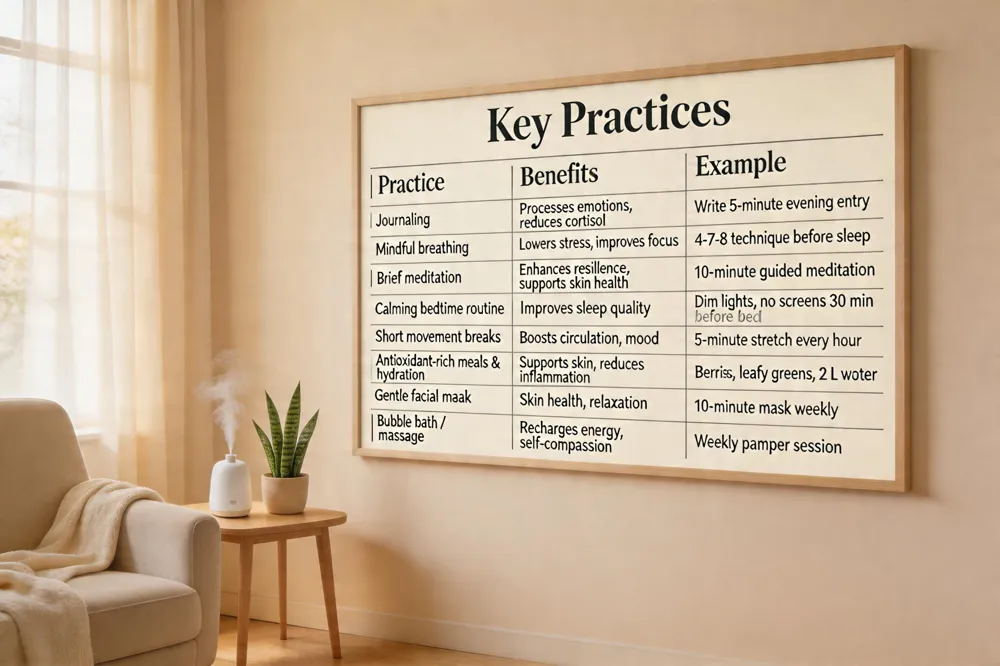
At home, create a calming bedtime routine, limit screen exposure, and enjoy short movement breaks (stretching, walking) to boost circulation and mood. Balanced, antioxidant‑rich meals, adequate hydration, and a gentle facial mask support skin health, while a 10‑minute daily meditation lowers stress (Harvard Health).
For adults, combine adequate sleep, hydration, and nutrient‑dense foods with regular activity—brisk walks, yoga, or light strength training—to improve recovery after aesthetic procedures and reinforce a positive body image (CDC, NIH). Treat yourself occasionally to a bubble bath, massage, or creative hobby to recharge energy and foster self‑compassion.
Mental‑health tips include daily physical activity, consistent sleep hygiene, deep‑breathing exercises, gratitude journaling, and staying socially connected. Seek professional help if anxiety or low mood persists.
Positive Thinking: Science‑Backed Benefits
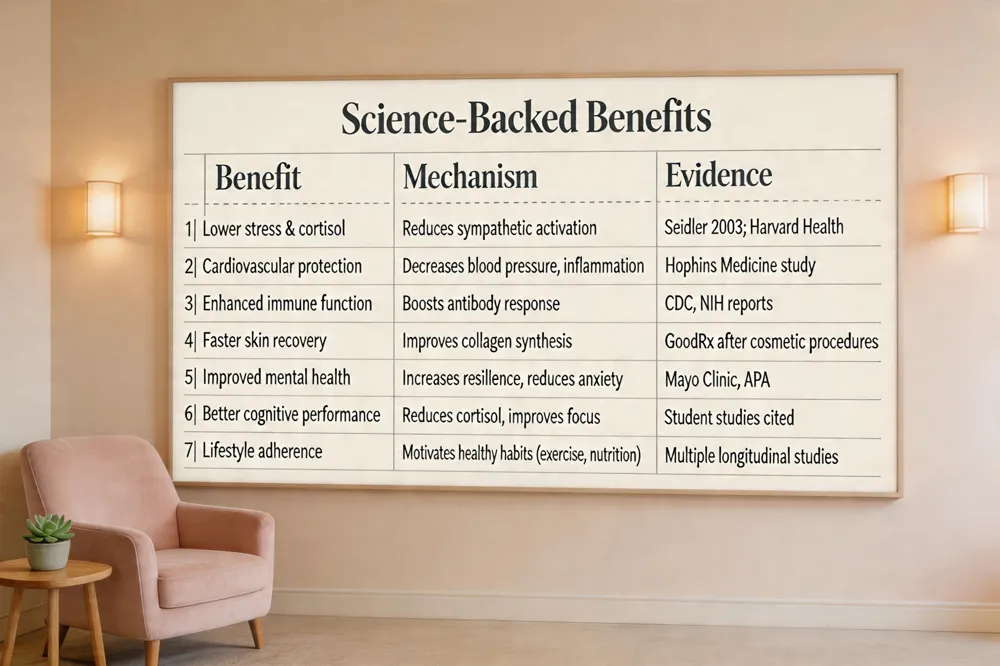
Science‑Backed Benefits
| Benefit | Mechanism | Evidence |
| Lower stress & cortisol | Reduces sympathetic activation | Seidler 2003; Harvard Health |
| Cardiovascular protection | Decreases blood pressure, inflammation | Hopkins Medicine study |
| Enhanced immune function | Boosts antibody response | CDC, NIH reports |
| Faster skin recovery | Improves collagen synthesis | GoodRx after cosmetic procedures |
| Improved mental health | Increases resilience, reduces anxiety | Mayo Clinic, APA |
| Better cognitive performance | Reduces cortisol, improves focus | Student studies cited |
| Lifestyle adherence | Motivates healthy habits (exercise, nutrition) | Multiple longitudinal studies |
| (https://rank-ai-generated-images.s3-us-east-2.amazonaws.com/4561c752-74b2-4d66-95f5-e7121f01f6f2-banner-71181a4e-1ad5-4c64-afc0-d72263efa439.webp) | ||
| Positive thinking lowers stress and cortisol, protecting the heart, reducing inflammation, and strengthening immune function, which together support longer, healthier lives and improve skin recovery after cosmetic procedures. Psychologically, optimism reduces anxiety, boosts resilience, and promotes higher life satisfaction, encouraging healthier habits such as regular exercise and balanced nutrition. For students, reduced cortisol enhances focus, memory, and motivation, while reframing challenges builds confidence and a supportive learning environment. Quotes from Buddha, Zig Ziglar, Maya Angelou, and Theodore Roosevelt illustrate how a hopeful mindset fuels perseverance and self‑belief. Maintaining optimism can lower blood pressure by easing cardiovascular strain and prompting lifestyle changes like adequate sleep and nutrition. Key advantages include better stress management, stronger immunity, improved cardiovascular health, healthier lifestyle choices, and greater resilience. These benefits, supported by CDC, NIH, Mayo Clinic, and Harvard research, underscore the practical value of daily gratitude, mindfulness, and positive self‑talk. |
Mind‑Body Techniques for Pain Relief & Healing
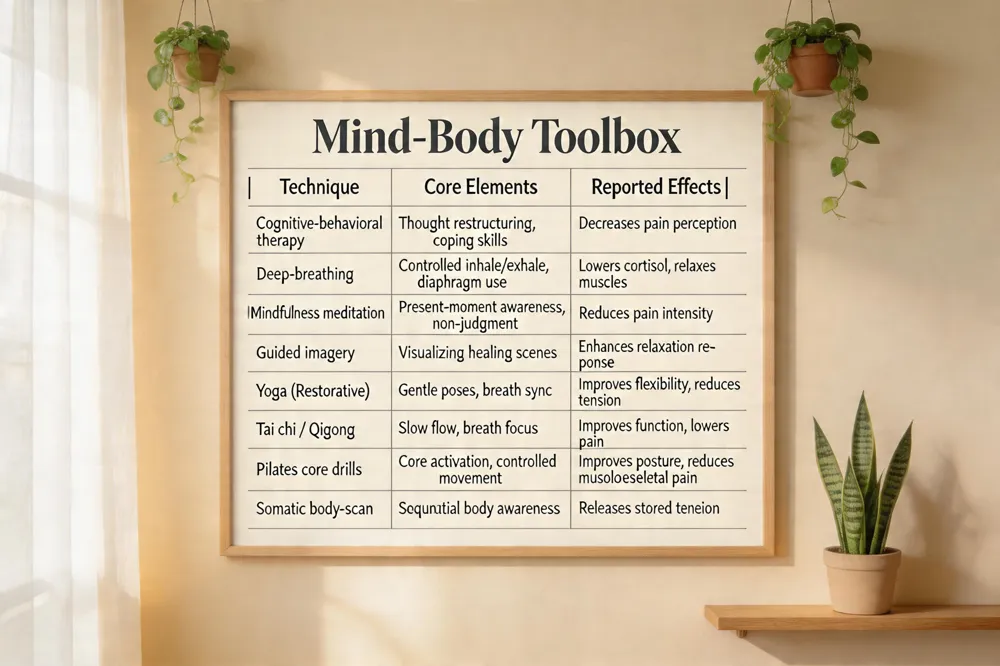
Mind‑Body Toolbox
| Technique | Core Elements | Reported Effects |
| Cognitive‑behavioral therapy | Thought restructuring, coping skills | Decreases pain perception |
| Deep‑breathing | Controlled inhale/exhale, diaphragm use | Lowers cortisol, relaxes muscles |
| Mindfulness meditation | Present‑moment awareness, non‑judgment | Reduces pain intensity |
| Guided imagery | Visualizing healing scenes | Enhances relaxation response |
| Yoga (Restorative) | Gentle poses, breath sync | Improves flexibility, reduces tension |
| Tai chi / Qigong | Slow flow, breath focus | Improves function, lowers pain |
| Pilates core drills | Core activation, controlled movement | Improves posture, reduces musculoskeletal pain |
| Somatic body‑scan | Sequential body awareness | Releases stored tension |
| (https://rank-ai-generated-images.s3-us-east-2.amazonaws.com/4561c752-74b2-4d66-95f5-e7121f01f6f2-banner-45a1abec-2ebe-4a21-82a5-648151ae7da8.webp) | ||
| Mind‑body techniques such as cognitive‑behavioral therapy, deep‑breathing, mindfulness meditation, and guided imagery activate the brain’s relaxation response, lowering cortisol and pain perception Mind‑Body Technique overview. Gentle movement practices—yoga, tai chi, qigong—combine controlled breathing with mindful motion, reducing pain intensity and improving function (yoga and movement therapies). Yoga’s diaphragmatic and alternate‑nostril breathing, restorative asanas (Child’s Pose, Legs‑Up‑the‑Wall), and Yoga Nidra deepen relaxation, fostering confidence and resilience for aesthetic transformation (Mind body transformation techniques yoga). Simple exercises—breath‑movement integrations, Pilates core drills, somatic body‑scan meditations—reshape posture, release tension, and enhance skin health (Mind body transformation techniques exercises). Mind‑body therapy, an integrative approach linking thoughts, emotions, and physiology, is non‑invasive, safe, and improves recovery after cosmetic procedures (What is mind-body therapy). Examples include meditation, mindfulness, yoga, tai chi, acupuncture, massage, and guided imagery (Mind-body practices examples). |
Optimizing Recovery After Cosmetic Surgery
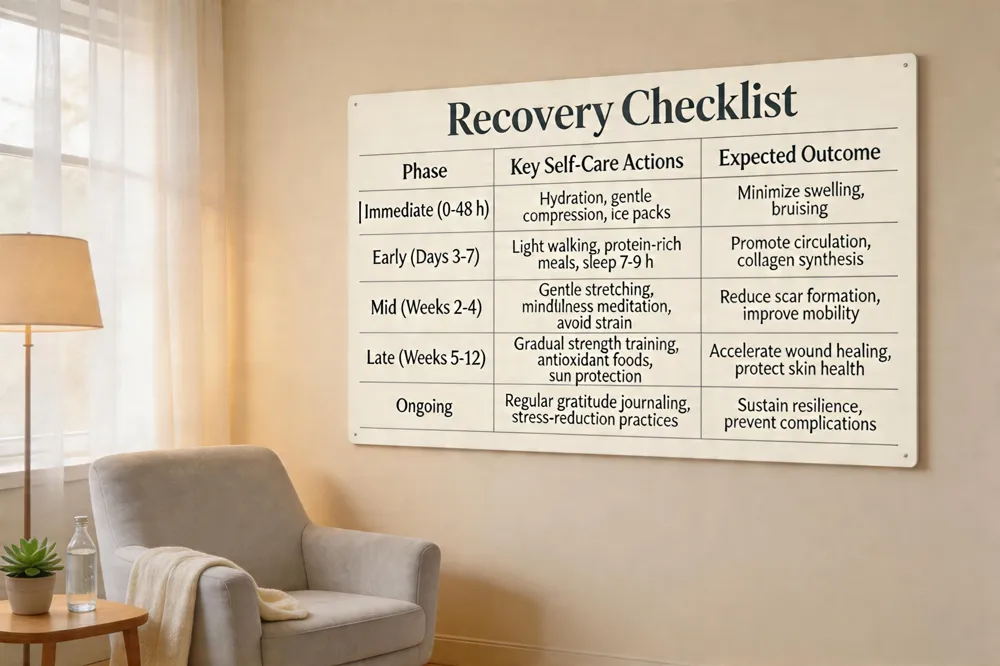
Recovery Checklist
| Phase | Key Self‑Care Actions | Expected Outcome |
| Immediate (0‑48 h) | Hydration, gentle compression, ice packs | Minimize swelling, bruising |
| Early (Days 3‑7) | Light walking, protein‑rich meals, sleep 7‑9 h | Promote circulation, collagen synthesis |
| Mid (Weeks 2‑4) | Gentle stretching, mindfulness meditation, avoid strain | Reduce scar formation, improve mobility |
| Late (Weeks 5‑12) | Gradual strength training, antioxidant foods, sun protection | Accelerate wound healing, protect skin health |
| Ongoing | Regular gratitude journaling, stress‑reduction practices | Sustain resilience, prevent complications |
| (https://rank-ai-generated-images.s3-us-east-2.amazonaws.com/4561c752-74b2-4d66-95f5-e7121f01f6f2-banner-daefe1a5-d92d-4957-83f6-a4518e68cf2f.webp) | ||
| Surgical recovery challenges – Extensive liposuction and abdominoplasty (tummy tuck) demand the longest healing periods, often three months of swelling, bruising and tissue‑tightening before normal activities resume. Facelifts and breast reductions typically resolve within two months, but individual rates vary with health and tissue manipulation. |
Plastic surgery education – The Cleveland Clinic Florida (CCF) Plastic Surgery Residency offers a three‑year ACGME‑accredited program emphasizing both cosmetic and reconstructive techniques, guided by Dr. Martin I. Newman and a low faculty‑to‑resident ratio for high‑volume operative experience.
Patient reviews and expectations – Plastic Surgeons of Akron hold 5‑star ratings on RealSelf, Facebook and Vitals, praised for Dr. Pedersen’s professionalism and realistic communication. Crystal Clinic Plastic Surgeons shows mixed public feedback (three‑star Yelp average) despite glowing internal testimonials, underscoring the need to review both sources.
Pre‑ and post‑operative self‑care – Adequate sleep (7‑9 h), balanced nutrition rich in vitamins C/E, regular gentle exercise, hydration, and mindfulness practices (meditation, gratitude journaling) lower cortisol, support collagen synthesis and improve circulation and accelerate wound healing, ultimately enhancing patient satisfaction and reducing complications.
Practical Self‑Care Routines for Daily Wellness
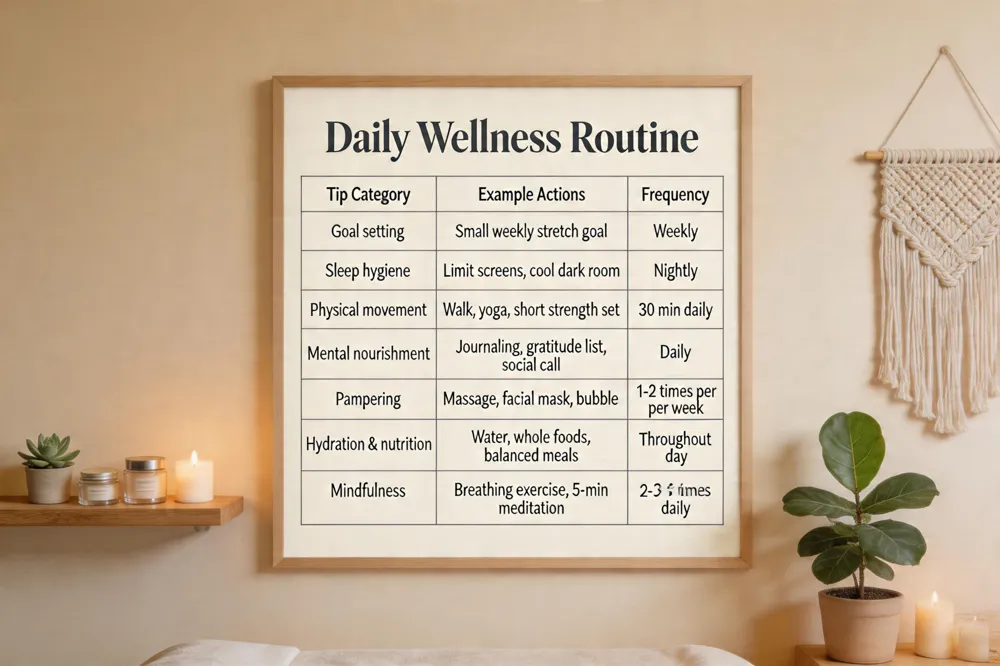
Daily Wellness Routine
| Tip Category | Example Actions | Frequency |
| Goal setting | Small weekly stretch goal | Weekly |
| Sleep hygiene | Limit screens, cool dark room | Nightly |
| Physical movement | Walk, yoga, short strength set | Minimum 30 min daily |
| Mental nourishment | Journaling, gratitude list, social call | Daily |
| Pampering | Massage, facial mask, bubble bath | 1‑2 times per week |
| Hydration & nutrition | Water, whole foods, balanced meals | Throughout day |
| Mindfulness | Breathing exercise, 5‑minute meditation | 2‑3 times daily |
| (https://rank-ai-generated-images.s3-us-east-2.amazonaws.com/4561c752-74b2-4d66-95f5-e7121f01f6f2-banner-89da627c-a10c-42a0-91f4-1f7a4e9244e2.webp) | ||
| Top 10 self‑care tips |
- Set small, weekly goals – five minutes of stretching, a breathing exercise, or a quick walk.
- Prioritize restorative sleep (≥7 hrs) and limit pre‑bed screens.
- Move daily – walk, yoga, or short strength work; get fresh air.
- Nourish mind and emotions with journaling, meditation, gratitude, and social connection.
- Schedule pampering (massage, facial mask) and ask for help when needed.
Top 10 tips to maintain your mental health
- Regular physical activity and a balanced, hydrated diet.
- Consistent sleep hygiene; limit evening screen exposure.
- Daily mindfulness or relaxation (breathing, meditation, journaling).
- Strong social ties, gratitude practice, acts of kindness/volunteering.
- Realistic goals, organization, professional help when needed, self‑compassion and boundaries.
7 habits for a healthy mind and body
- Eat whole foods, choose fresh fruit over juice.
- Practice daily gratitude (≥3 items).
- Keep consistent meal times.
- Take brief walks after larger meals.
- Journal thoughts, goals, reflections; embed mindfulness moments.
- Recognize and reward positive habits.
7 rules of positive thinking
- Guard thoughts – replace limiting statements with empowering ones.
- Focus on solutions.
- Surround with positive people.
- Practice daily gratitude.
- Speak positively.
- Learn from setbacks.
- Maintain belief in possibility.
Three P’s of positive thinking – Personalization, Permanence, Pervasiveness.
5 C’s of mindfulness – consciousness, compassion, confidence, courage, community.
Rewiring your brain for positivity – Label negative self‑talk, replace with realistic affirmations, practice daily gratitude, use mindfulness/visualization, reframe setbacks, set achievable goals; repeat to train neural pathways.
Resources & Further Reading on Positive Thinking
Helpful Resources
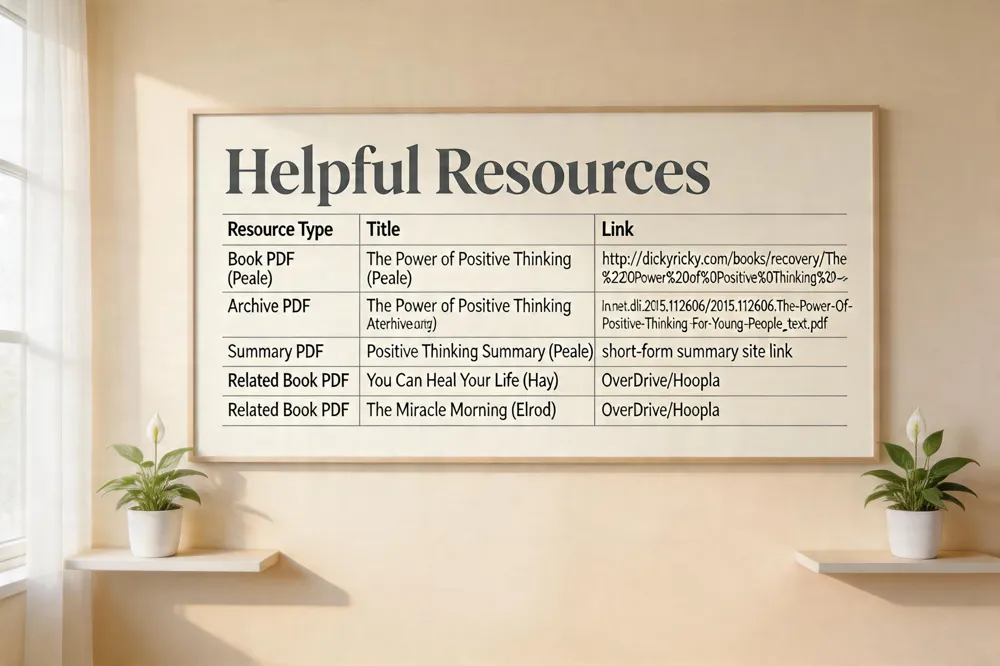
The Power of positive Thinking summary PDF – A concise one‑page PDF summarizing Peale’s ten steps for building self‑trust and positive self‑talk is available from short‑form summary sites and the author’s official page.
The Power of positive Thinking book – Published in 1952, this self‑help classic teaches faith‑based affirmations, visualization, and constructive mental attitudes to replace doubt with confidence, influencing millions worldwide.
The power of positive thinking chapter 1 – Chapter 1, “Believe in Yourself,” emphasizes self‑belief as the foundation of success, showing how confidence can overcome fear and adversity.
Positive thinking books PDF – Besides Peale’s work, PDFs of You Can Heal Your Life (Louise Hay) and The Miracle Morning (Hal Elrod) are often found on reputable library lending platforms such as OverDrive or Hoopla.
Embracing a Holistic Path to Beauty
A positive mindset and intentional self‑care work together to enhance both mental well‑being and physical outcomes in aesthetic medicine. Gratitude journaling, balanced nutrition, regular aerobic activity, adequate sleep, and mindfulness meditation lower cortisol, improve immune function, and support collagen synthesis—factors that reduce postoperative inflammation and promote faster wound healing (Mayo Clinic; CDC; Harvard Health). When patients adopt these evidence‑based habits, they gain greater control over their recovery, experience less anxiety, and report higher satisfaction with cosmetic results (Cleveland Clinic; Avita Health). Empowering individuals to set realistic expectations, track progress, and practice self‑compassion transforms the aesthetic journey from a purely procedural event into a holistic, patient‑centered experience.